Stone, mud, orders — and the layer where the work still lies.
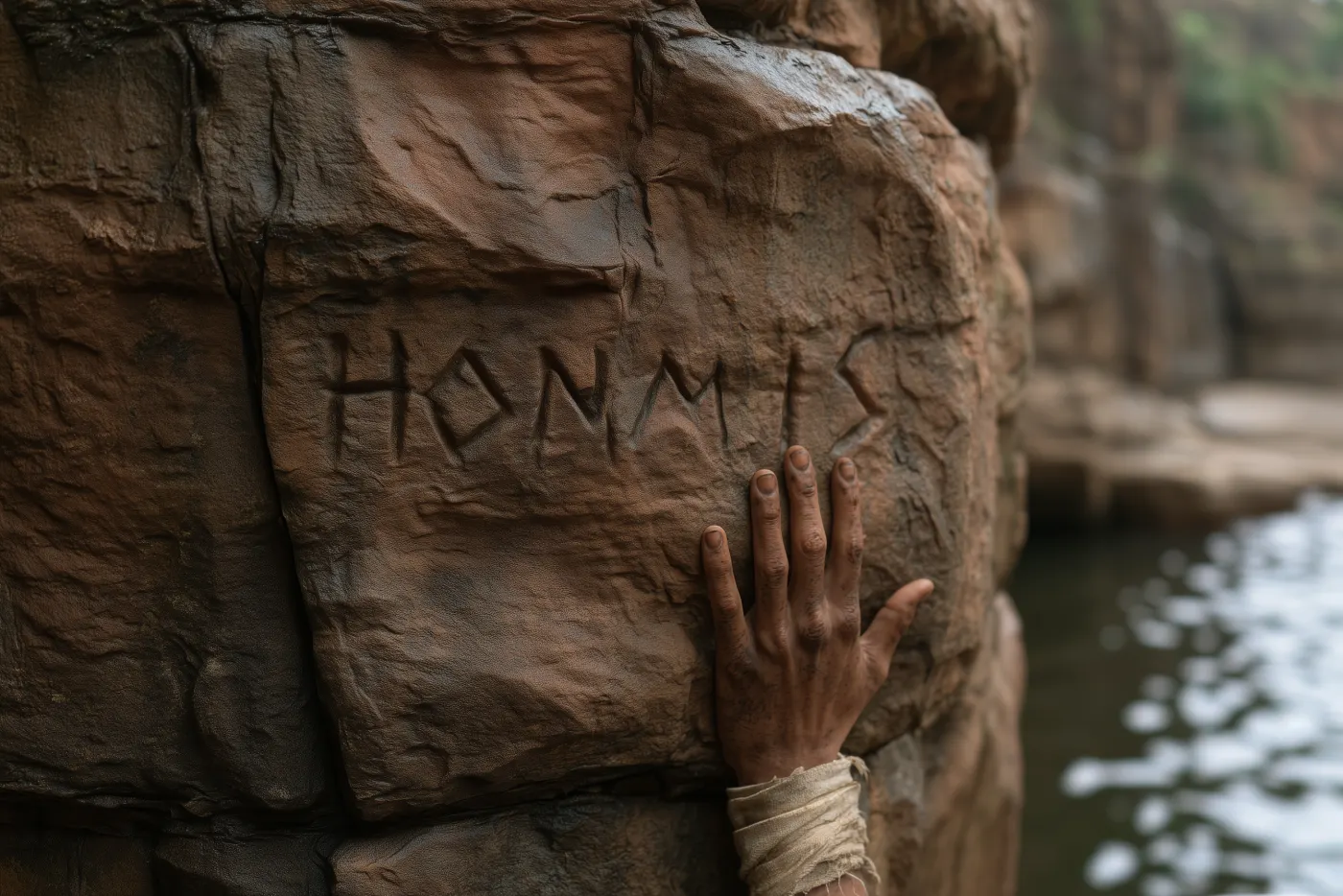
The band that remembers them — quarry chips, lime, hobnails, a centurial stone in the Wall's fabric.

Hadrian's Wall is authority becoming labour — an imperial order turned into surveyed lines, quarry faces, carts, lime, stone and weather by thousands of people whose names mostly vanished into the work. We can recover the work in extraordinary detail. We lose almost every worker.
The rule: the lower Wall is archaeology; the upper Wall and the human day are reconstruction.
If you could cut a clean slice through the Wall today, the lower fabric is archaeology; the upper finish is honest reconstruction.
From the ground up: a broad, shallow foundation of cobbles and clay; large footing stones; a stepped offset; then two dressed sandstone faces enclosing a rough core of rubble, clay and stone — not Roman concrete. E1 E2
Above that line — full height, any wall-walk, parapet or render — nothing survives. We show it ghosted, because that is exactly how certain we are. Q R
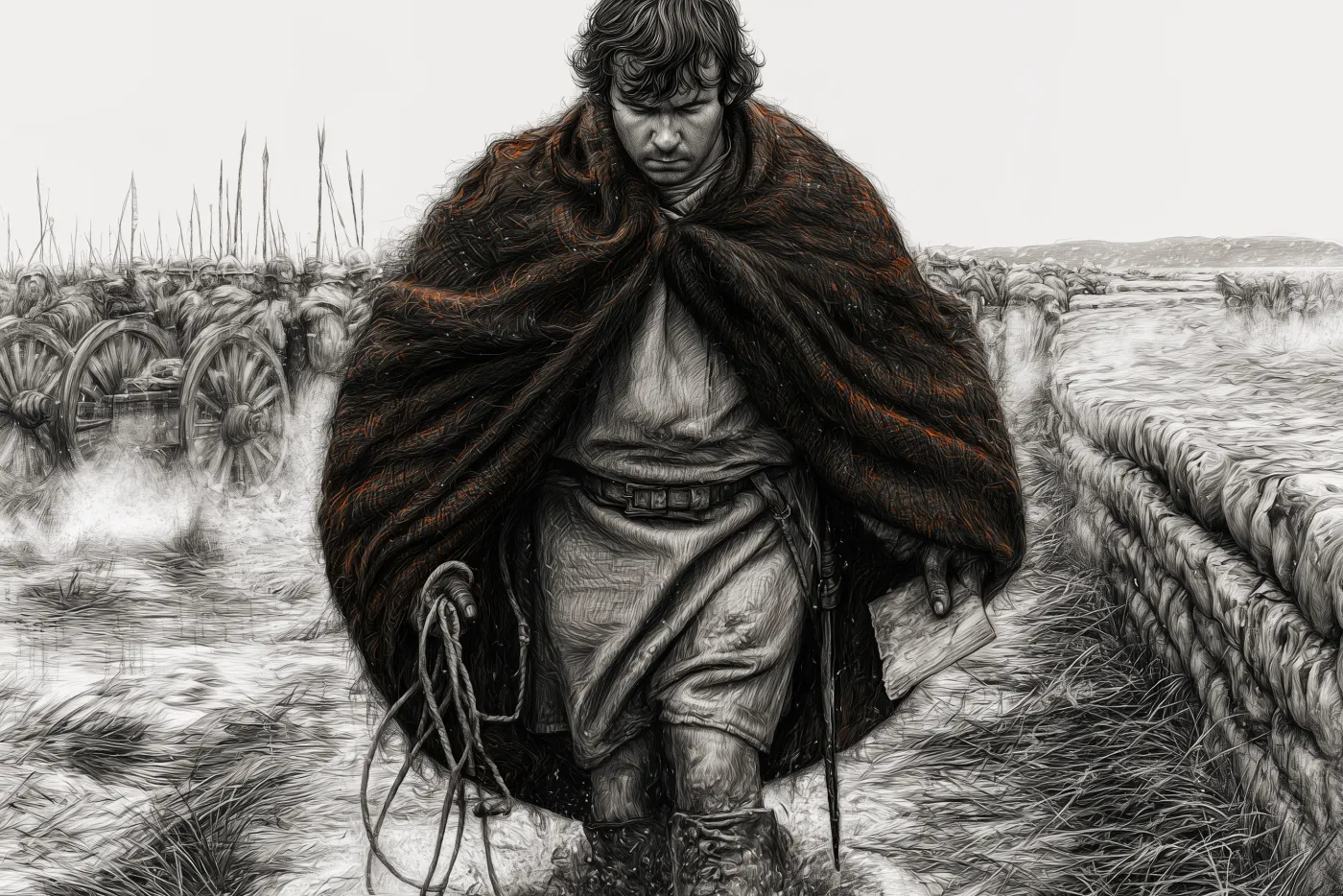
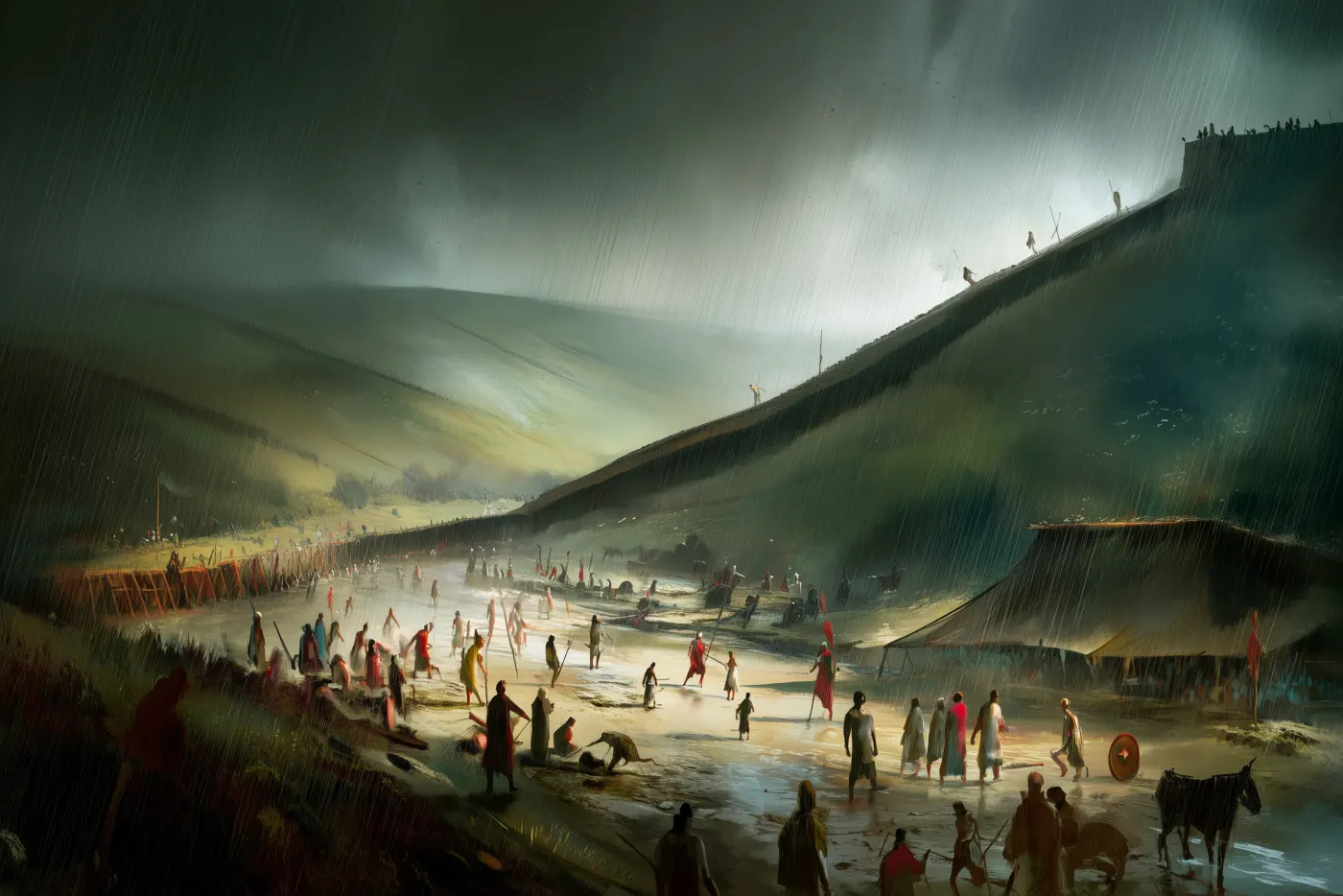
Before a stone moved, the army turned landscape into a measured military line: surveyors with cords and stakes, the turf and topsoil stripped to firm ground, a foundation cut to suit whatever lay beneath. The first act of building was disturbance — a scar drawn across farms and fells. E2

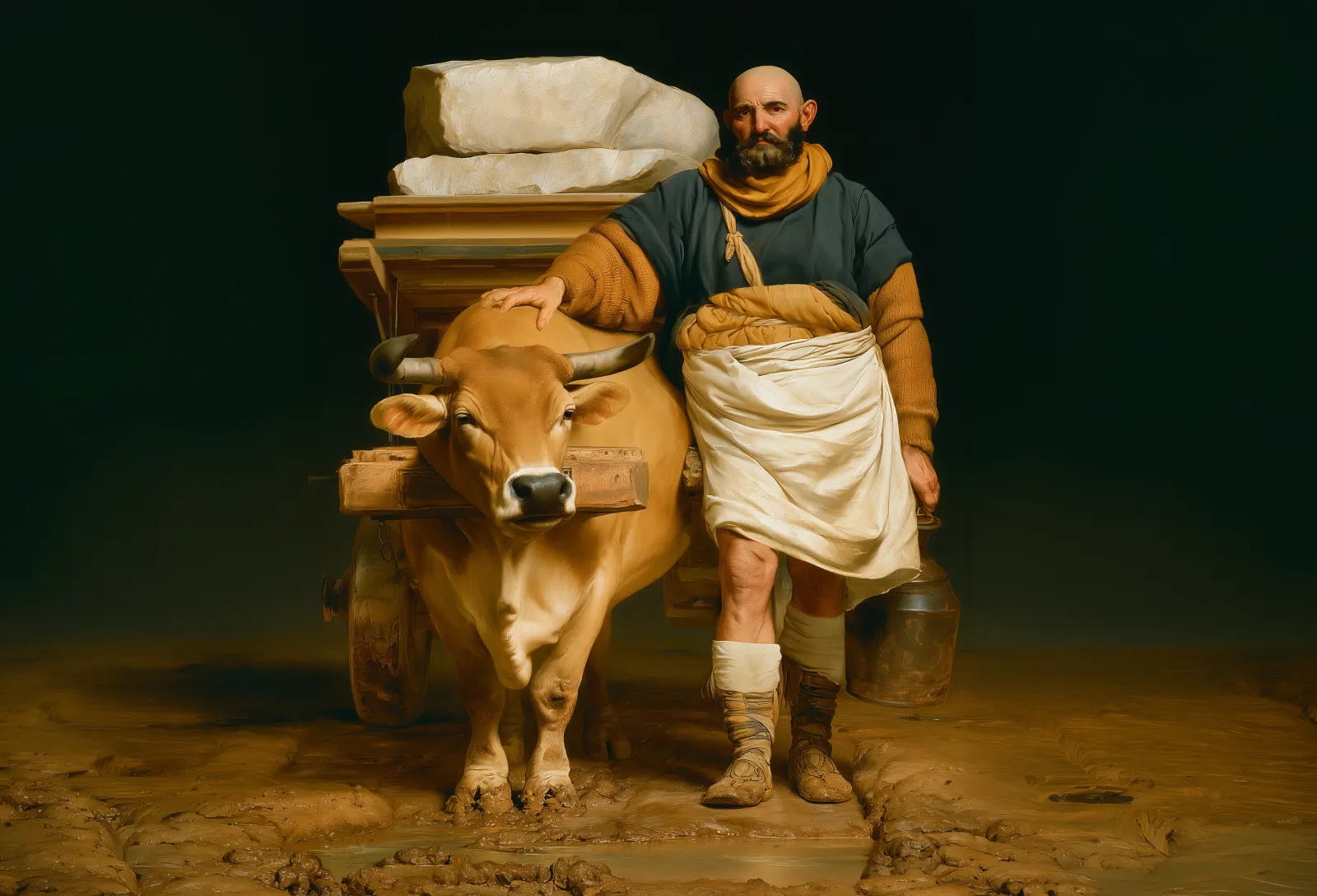
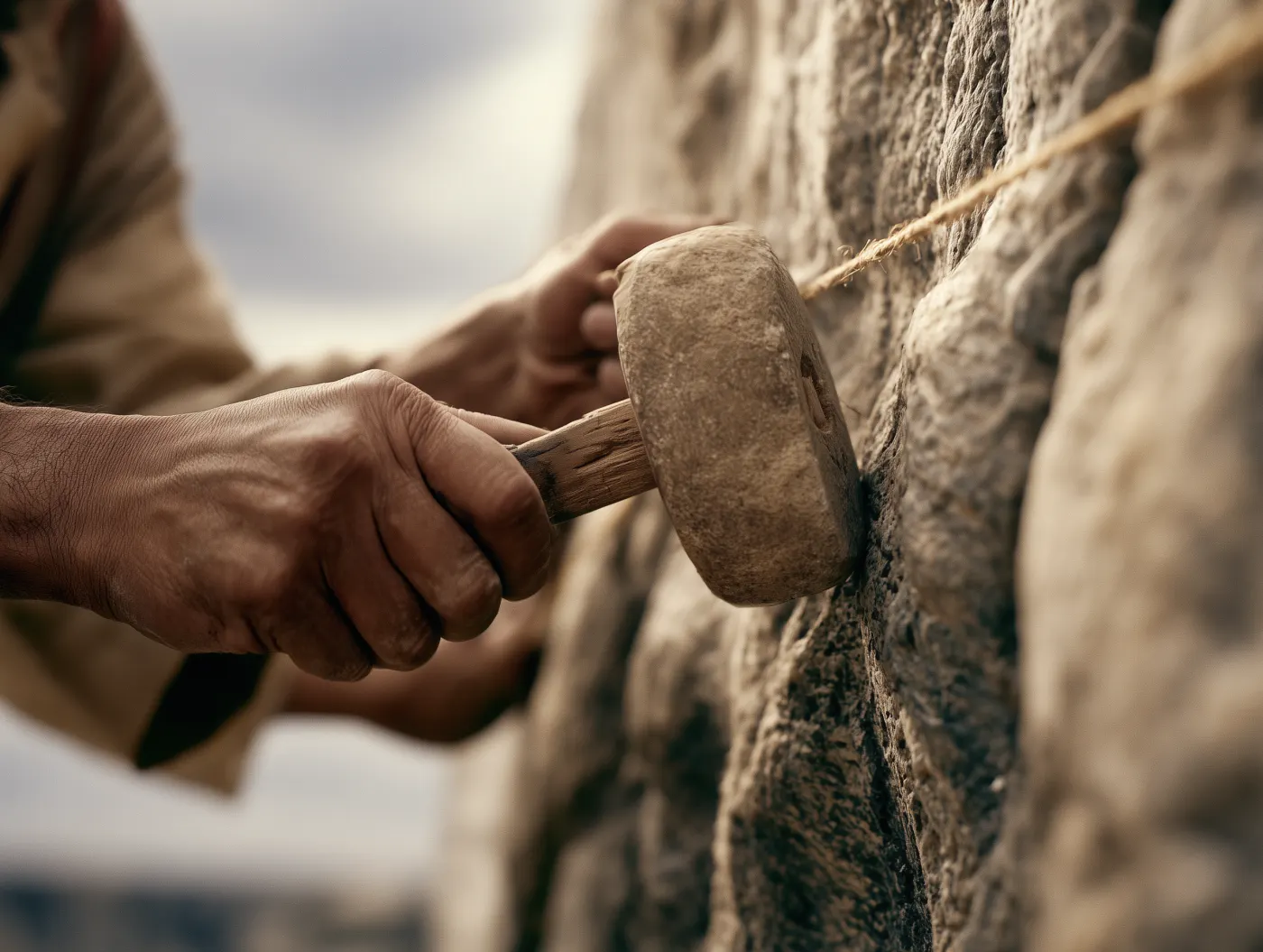
The Wall was made from the working landscape beside it — local sandstone wedged from faces often within a mile of the work, hauled short distances by ox-cart over bad ground. "I did not care to injure the animals while the roads are bad," wrote one frontier supplier. Long-haul stone was avoided by design. S

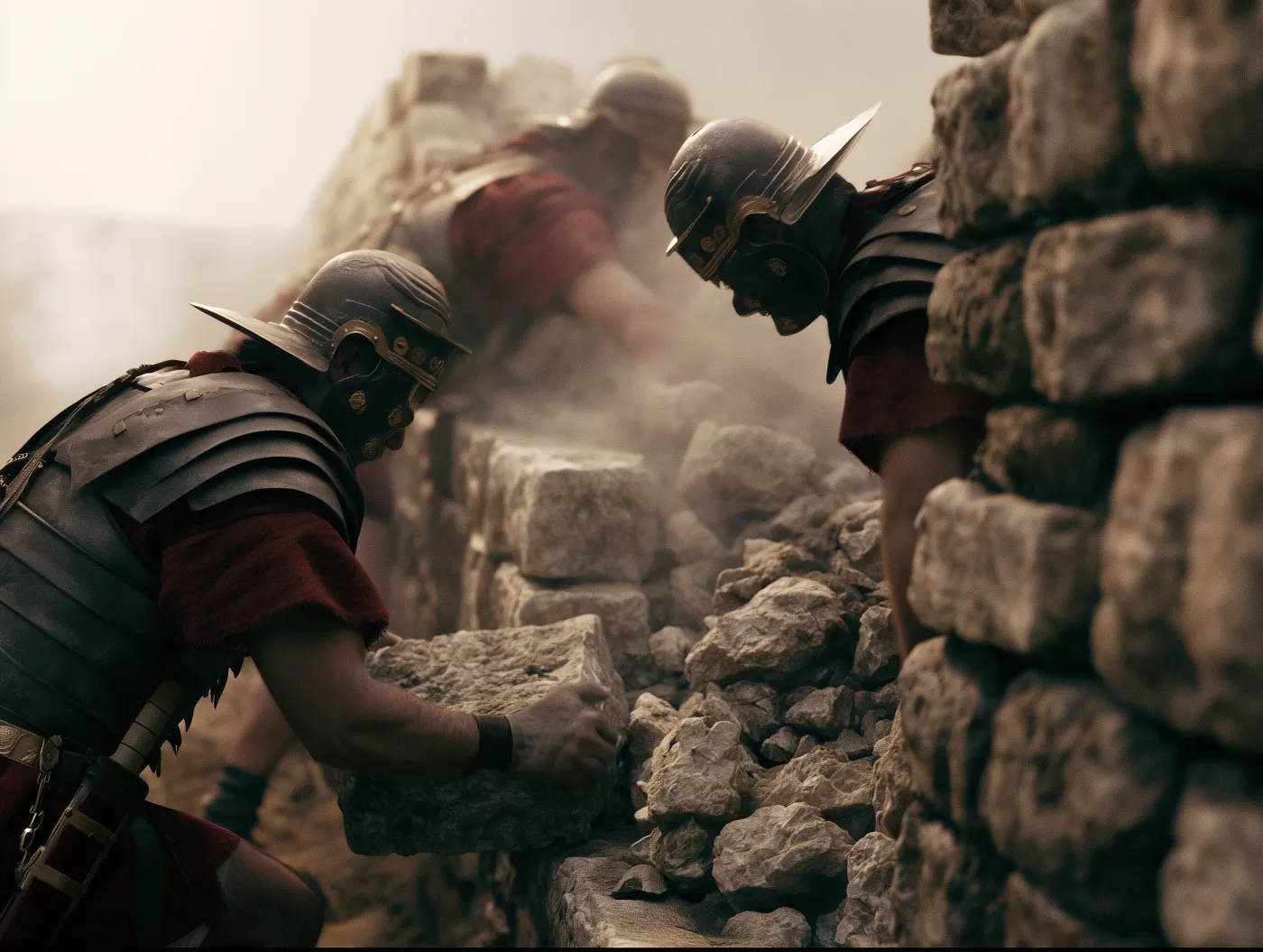
Two dressed faces, each stone (about a one- or two-man load) tapered back to grip a rubble-and-clay heart, raised in lifts behind timber working platforms. A century of roughly eighty men took a measured stint, sometimes marking it with a building stone — then leap-frogged ahead to the next. E1 I

A cold, wet, windy line; heavy lifting; chronic illness on the frontier (one fort's report counts the sick, the wounded, the men with inflamed eyes). The day can be pictured, not timed — first light, orders, daylight work, beer and bread — but no AD 122 builder's diary survives. I R

The Wall was never finished once. It was repaired, narrowed, rebuilt, robbed and reused — kept alive by later hands across three centuries and quarried for farms and churches long after Rome. E1 S

A name in stone is not a biography. These are the real traces — set against the silence they sit in.
Names appear here as traces, never as portraits. RIB and Vindolanda references are used as evidence markers, not biographies.
The morning probably began in the cold, by army habit: first light, a muster, orders given, the gangs counted and assigned. Builders likely used temporary camps, existing Stanegate bases and forward work sites — leather tents and military mess groups are a Roman-army reconstruction, not a surviving Wall diary.
Work likely ran with the daylight — long in summer, short and weather-broken in winter — with pauses shaped by weather, supply and command. The hardships are easy to believe: rain stalling earthworks, soft ground swallowing carts, strains and crush injuries from lifting stone all day.
And there was no culture of punished failure in the stones — what the archaeology shows is redesign, not collapse: the Wall narrowed, turf rebuilt in stone, forts added as the plan changed underneath the work.
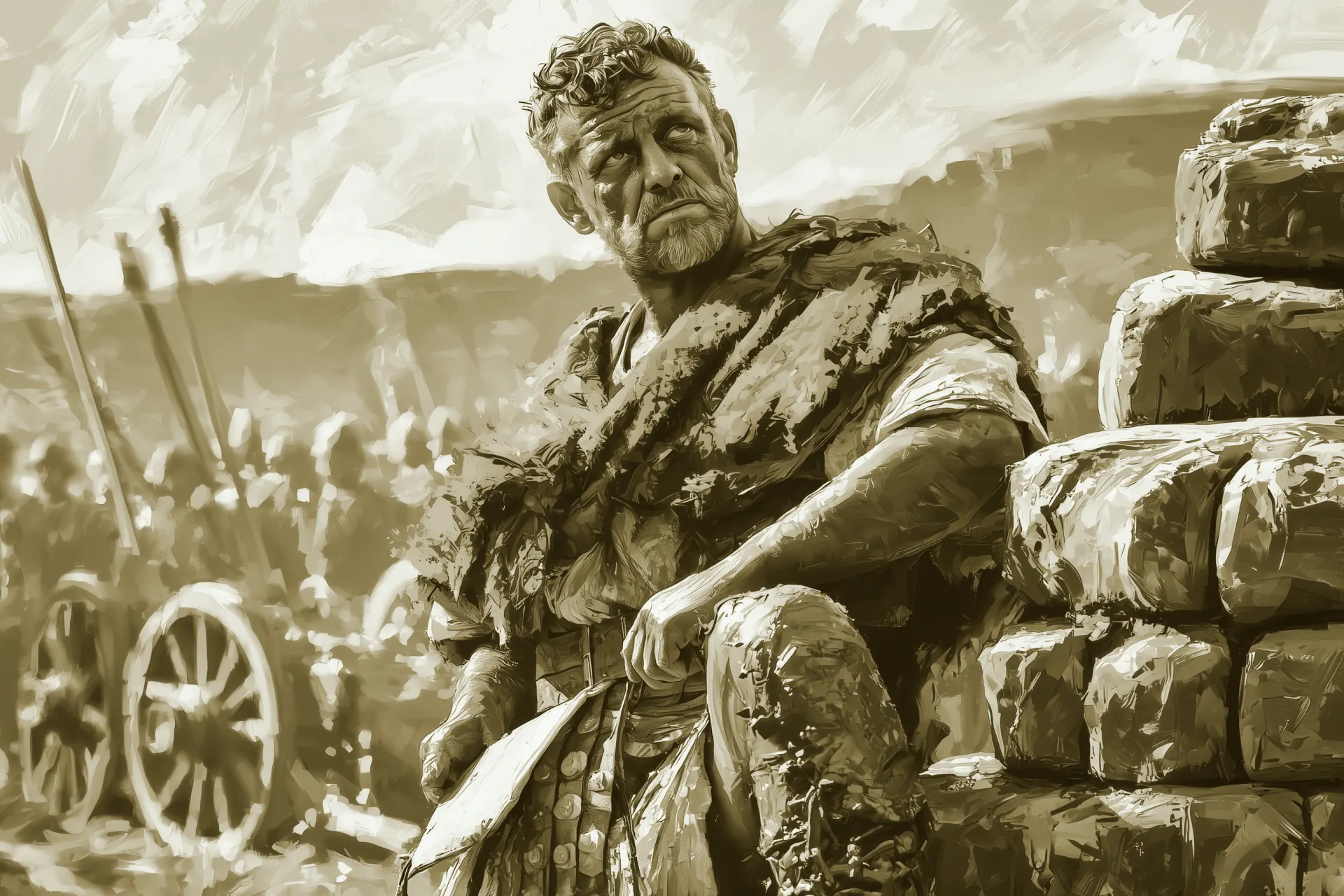
Mostly, it can't. The Wall's sandstones are too alike to fingerprint a single block to a single pit. So this is a composite journey, not one real stone's life.
Wedged from a local face — sometimes a quarry carries a Roman inscription, rarely a name.
E2Squared and chisel-drafted, cut to taper back and key into the core.
E2Carted a short distance over rough ground — most stone travelled in local sections.
ILaid into one of the two faces inside a century's measured stint.
E2Recut or refaced over centuries of upkeep — Gelt records quarrying for repair in AD 207.
E1Robbed after Rome for farms, churches and field walls — the Wall's longest afterlife.
SComposite stone biography. Most stones cannot be traced to one quarry — and none to one hand.